Wood fencing is a popular choice for homeowners who want privacy, security, and a natural look around their property. A well-built wood fence can create a more secluded backyard, safely contain children and pets, help define property lines, and even provide a barrier against wind, debris, and some street noise.
In Hughes Lumber’s markets, residential wood privacy fencing primarily comes down to two materials: cedar and treated yellow pine. Both resist rot and insects and can be used to create a variety of fence styles. The right choice depends on your budget, preferred appearance, and plans for maintaining the fence.
Here are some of the most popular types of wood fencing to consider for your home.
1. Traditional Wood Privacy Fence
A traditional privacy fence uses closely spaced or overlapping vertical boards to create a solid barrier around the yard. It’s one of the most practical options for homeowners who live close to neighbors or simply want more separation between their outdoor space and the surrounding area.
Privacy fencing can help:
- Block views into the yard
- Safely contain children and pets
- Define property lines
- Reduce some street noise
- Create a barrier against wind and blowing debris
Both cedar and treated yellow pine can be used to build residential privacy fencing.
2. Dog-Ear Wood Fence
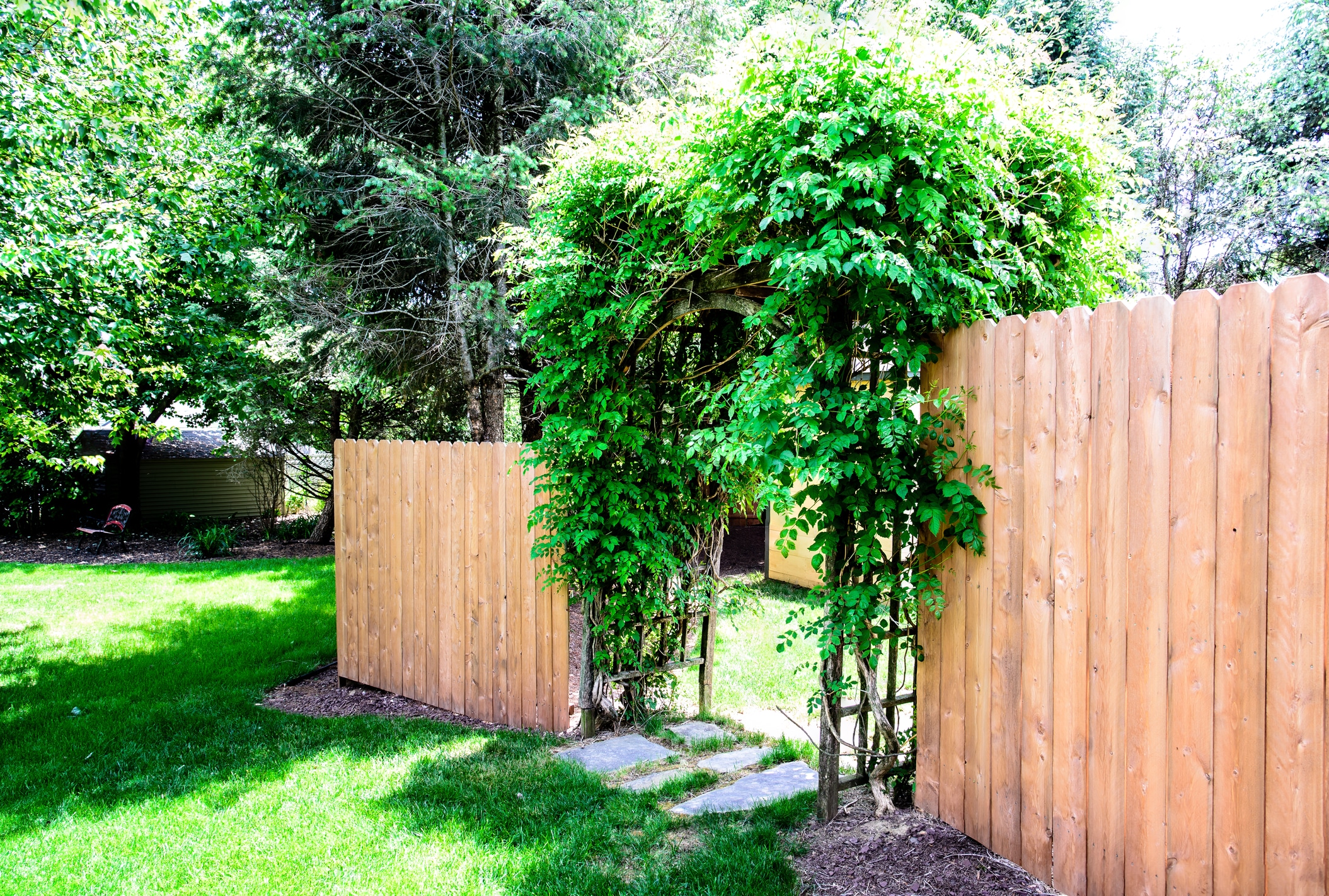
Dog-ear fencing gets its name from the clipped upper corners of each fence board. It’s a simple detail, but it gives the top of a traditional privacy fence a more finished appearance.
This style works well for homeowners who want the coverage of a full privacy fence without adding elaborate decorative features. Its straightforward construction also makes it a versatile choice for a wide range of homes.
3. Flat-Top Wood Fence
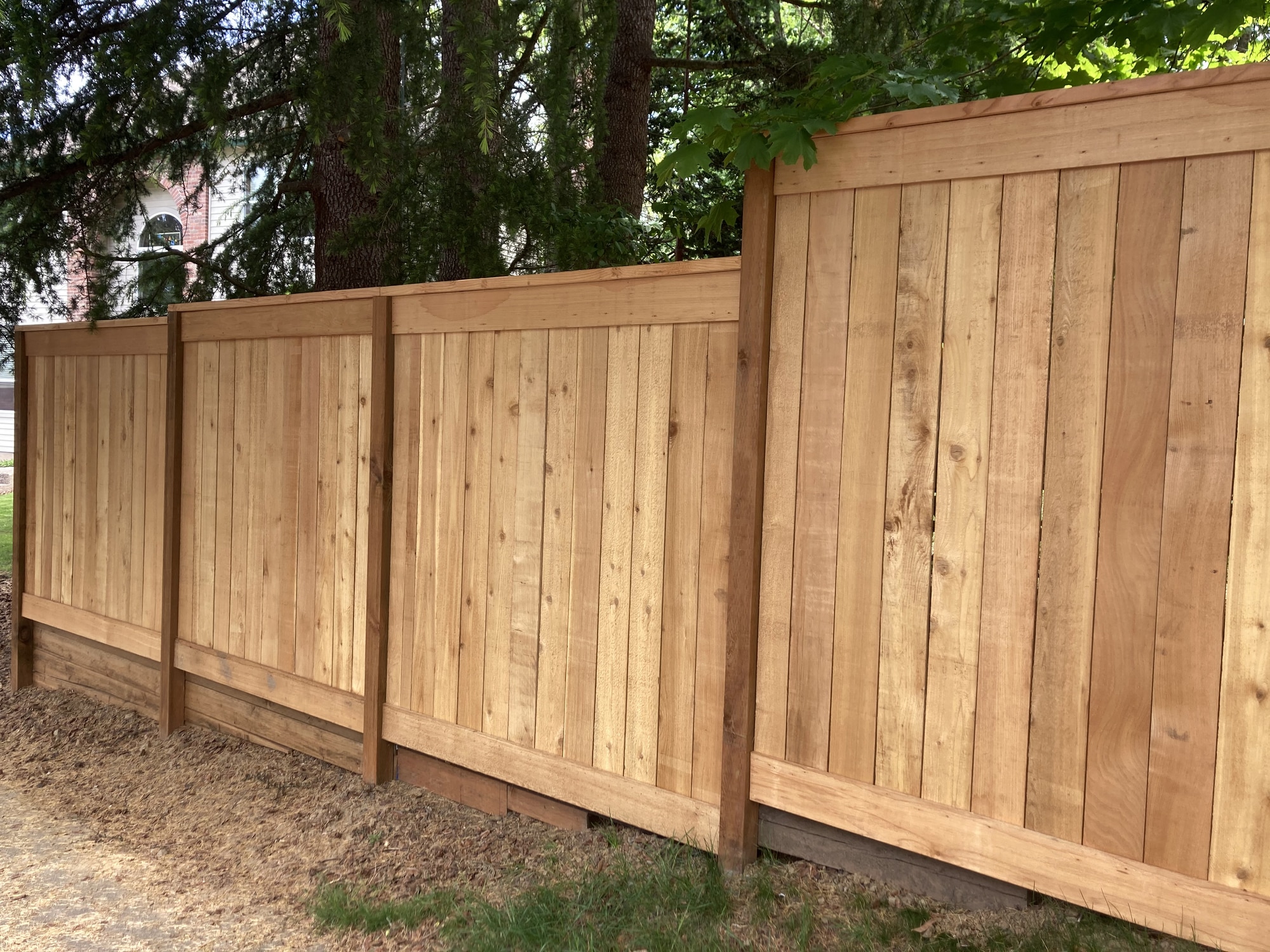
For a cleaner appearance, a flat-top fence keeps the upper edge of the fence boards level across each section. The simple profile can complement both traditional and more contemporary homes.
Additional trim can be incorporated into the design to give the fence a more finished or customized appearance.
4. Shadowbox Wood Fence
A shadowbox fence typically places boards on alternating sides of the rails. This creates a finished appearance from both sides while leaving small openings that allow some air and light to move through the fence.
It’s a good option when homeowners want separation between properties without the completely solid appearance of traditional privacy fencing.
5. Horizontal Wood Fence
Instead of installing fence boards vertically, horizontal fencing runs the boards parallel to the ground. The long, clean lines give the fence a more modern appearance and can turn a functional backyard boundary into an architectural feature.
Cedar is particularly attractive in designs where the natural color and grain of the wood are intended to remain visible.
Cedar vs. Treated Yellow Pine Fencing
Although there are numerous ways to design a wood fence, cedar and treated yellow pine are the two wood species used for privacy fencing in Hughes Lumber’s markets.
Cedar Fencing
Cedar is naturally attractive and offers resistance to rot and insects. Its color and wood grain make it an appealing option for homeowners who want the fence itself to contribute to the overall appearance of the property.
Cedar fencing can also be painted or stained, providing flexibility to coordinate the fence with the home’s exterior or other outdoor features.
Treated Yellow Pine Fencing
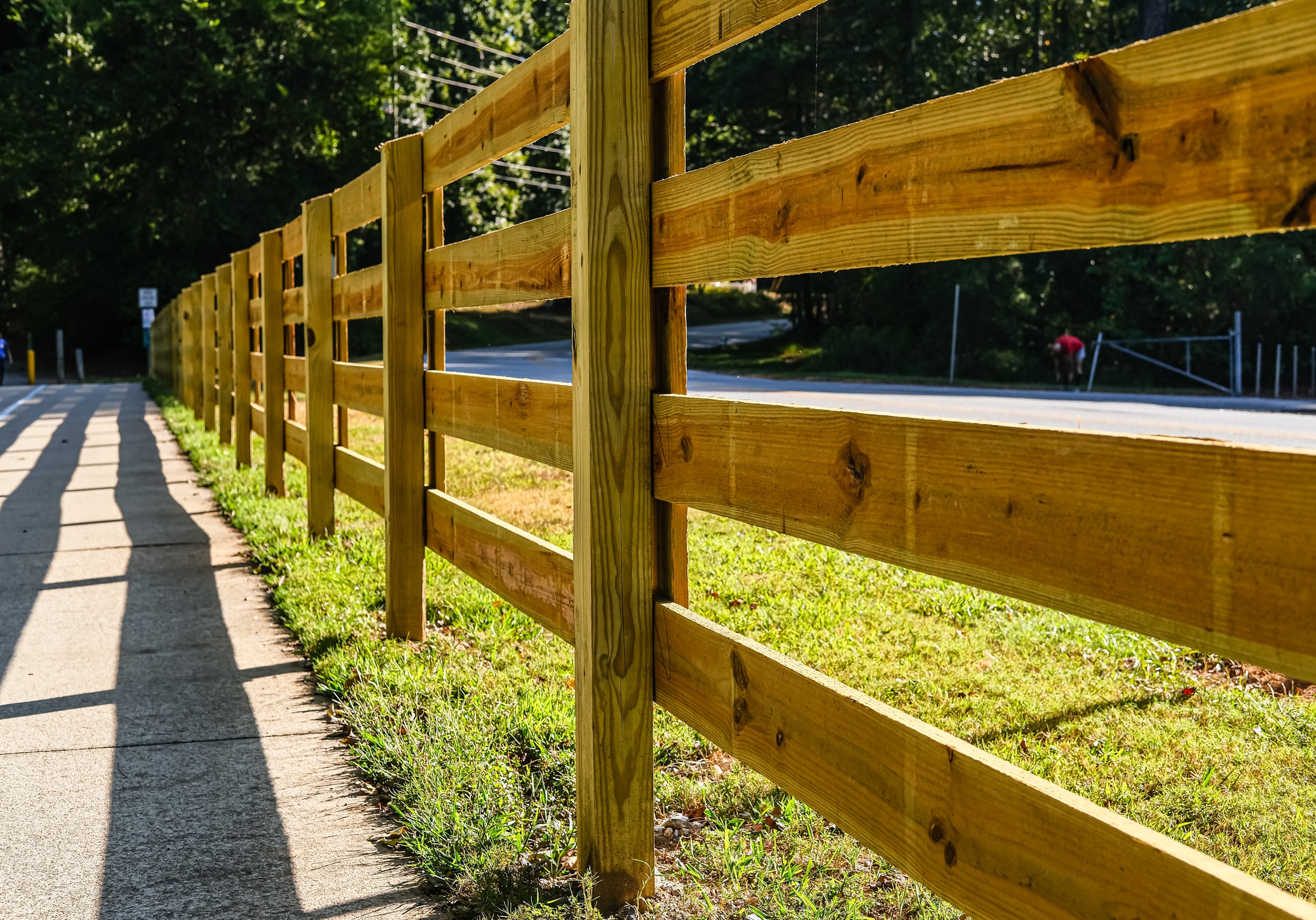
Treated yellow pine is another practical option for residential privacy fencing. The treatment helps the wood resist rot and insect damage, making it suitable for long-term outdoor exposure.
For homeowners balancing durability and project cost, treated yellow pine provides a dependable material for many traditional privacy fence designs.
Design Features and Customization
One advantage of building with wood is the flexibility it provides during installation. Wood can be cut and modified on-site, making it easier to accommodate changes in grade, property layouts, gates, and other project-specific requirements.
Homeowners can also customize the appearance through the orientation and shape of the fence boards, decorative trim, gates, paint, or stain. Those choices make it possible to build a fence that provides the privacy you need while complementing your home’s architecture and landscaping.
Choosing the Right Wood Fence
Start by considering what you want the fence to accomplish.
If maximum seclusion is the priority, a solid privacy fence may make the most sense. Homeowners interested in airflow and an attractive appearance on both sides may prefer a shadowbox design. For a more contemporary property, horizontal boards can provide a distinctly modern look.
Material is another consideration. Cedar offers natural character and finishing flexibility, while treated yellow pine provides rot and insect resistance in a practical residential fencing material.
Budget matters, too. Wood privacy fencing is typically less expensive than premium vinyl or composite fencing while providing the natural appearance many homeowners prefer.
Installing and Maintaining a Wood Fence
Proper installation plays an important role in the long-term performance of any wood fence. Posts need to be properly placed and secured, fence sections should accommodate the property’s grade, and gates require adequate support to operate reliably.
Maintenance depends on the material and the appearance you want to maintain. Cedar can be painted or stained, while ongoing care can help protect wood fencing from years of exposure to sun, rain, and changing weather conditions.
Wood Fencing FAQs
Build Your Wood Fence with Hughes Lumber
Whether you’re planning a cedar fence or treated yellow pine privacy fence, starting with quality lumber can make a difference in the finished project.
Hughes Lumber supplies residential fencing materials and offers Pro-Delivery Service to help get the materials you need to the job site. Talk with the Hughes Lumber team about your fence design, material needs, and project requirements to get started.